Hi all! Happy NEW year to begin with. NEW as a target does not mean new as dogma. We can, however, use some new energy and new breakthroughs in the terrible conflicts. Let me know what is your new for 2024…
First of all, I like to welcome all of you into the fresh year. And especially the new subscribers who found my newsletter via the post of Matt Webb. Thanks for the shout-out, Matt! If you would like to know more about the backgrounds of the blog and the topics, and myself, check the About page. Normally this email is sent on Tuesday mornings, this week a day delayed due to the holidays.
I will continue with the newsletter this year for sure; I even intend to make more time for it. I started my own practice at the end of last year, which I have also named Target is New. The focus remains the same: the impact of new relations between humans and tech, with a special interest in manifesting the interactions with things. With the rapid developments in AI, new forms of ‘intelligence’ are of special interest. I started researching predictive relations with things some years ago that are becoming more relevant these days, and I intend to update this research. Next to that, we have been experimenting with this in projects last year in Cities of Things projects like Hoodbot.
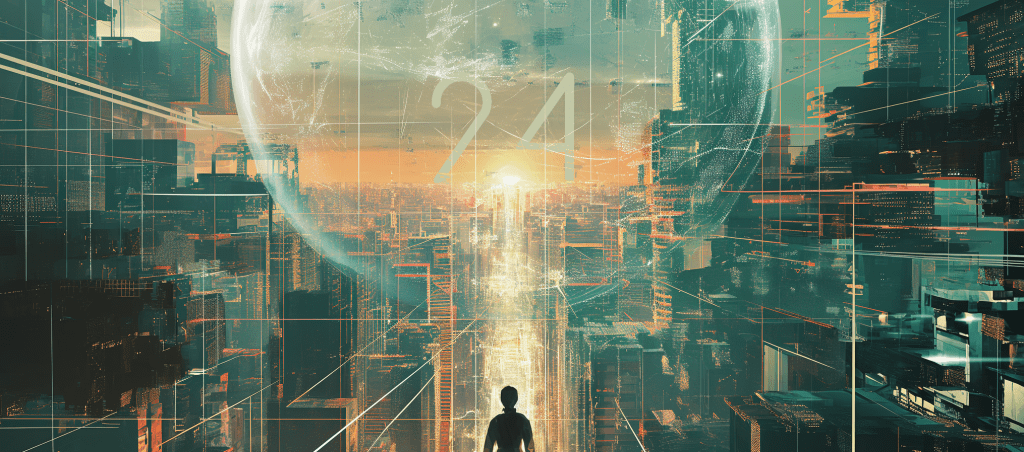
The weekly image is made with Midjourney. I like to put in the newsletter title that emerges from this newsletter as a prompt and start a little conversation to get the right feel. Often, it is only choosing one of the four options or filtering some cliche images for intelligence. This time I started a conversation to formulate the right prompt. It is my 2024 WIP (work in progress) wish.
Check it out via targetisnew.com/2024-WIP.
Triggered thoughts
Every week, I share a thought triggered by one of the news reads or more general observations. I will not call it a column and try to keep it short, but not always manage 😊
I might have mentioned it before here; for a futuring workshop at the Design & AI conference we created a magazine from the future, the proven method by the futurists of Near Future Laboratory. To prime thinking about the future, I always like to look back at the same period, so what did change the last ten years to make a truthful prediction for the next 10 years? Or for one year if you are on the verge of a new year like we are now.
Last year was extreme, however, with the breakthrough of mundane AI. Generative tooling via chat interfaces, in combination with magic generative powers, made the intelligent capabilities the talk of the town, not only with professionals. The impact of ChatGPT on the work of friends not working in tech-related positions was a topic at the New Year’s celebration dinner.
I like the word mundane here as it indicates how it has been catapulted in our everyday life. We still have only a small group of people really using it on a day-to-day basis, but the knowledge and opinions are widely spread. So, putting the lens on the next year or two will become part of everyday life even more. There is a lot of attention on the synthetic media and potential dangers of uncertainty.
One other interesting point that also entered the mainstream debate in the Netherlands, in the tradition of the ‘Oudejaarsconference’, the comedian -of course- discussed the impact of AI. I liked how he created the frame of personalised services; we all get used to personalised streams, but even when we shape reality to our personal preferences, everything becomes part of a personal bubble. In his view, that is problematic as it makes our world smaller. We don’t know what others think about topics, and that is an acceleration of the polarisation.
This is a longer process developing, silently in the ‘social’ media algorithmic streams. The impact of the mundane AI is a further entanglement and capsulation in our bubbles. We think we are creating new insights from our conversations, but in practice, we end up with validated influenced opinions.
There is a positive route to explore, though. As the comedian framed it, we think ChatGPT is intelligent if it creates the answers to an assignment for a student, but real intelligence would be if it understands that the learning is part of the assignment, and doing it yourself is part of this.
I hope we will see AI assistants that become less an assistant and more a coach, lowering barriers to finding your own solutions and creating more of a safe space to experiment with yourself rather than taking over your tasks.
In the “Tech won’t save us”-podcast of last week, there was a conversation about the AI hype and the projected developments. Will AI take away the work humans like the most in an uncanny way, and will it deliver up to the promises? How will it impact the valuation of analogue work? Paying more for non-AI jobs. What is the real driver here?
As being creative is tedious in the process of revisiting what you have done before in a new way, it is something we should be aware of in valuating workload.
Read the upcoming events, notions from the news and paper for the week via the newsletter.
See you’ll next week!
Next week, I will be back on the weekly Tuesday morning routine, I am sure. If you have any requests or remarks on the newsletter, let me know. You can easily reach out via iskander at targetisnew.com

 target is new